How much does it cost to live in Italy: not average values, but real figures for November 2025
How much does it cost to live in Italy is one of the first questions when planning a move, study or investment. But the standard “from 800 to 1,500 €” does not reflect reality: the costs strongly depend on the region, lifestyle and family composition. In 2025, the difference between the south and the north has grown to 60%, and hidden payments (utilities, taxes, insurance) add another 15-20%. Below is only the current data collected for October–November 2025.
Average budget per person in 2025-2026
– In Calabria (for example, in Croton) — from 950 €/month: rent 350 €, groceries 220 €, transport 25 €, utilities 110 €.
– In Sicily (Catania, Palermo) — from 1,100 €/month, but above the price of air conditioning in summer (+60-80 €).
– In Puglia (Salento) — from 1,050 €/month, due to low rent and local markets.
– In Rome (not the center) — from 1,650 € /month, of which rent — 700 €, groceries — 280 €.
– In Milan (the suburbs) — from 2,100 €/month, and in the center — from 2,800 €/month.
Please note: in cities with universities (Bologna, Perugia), you can reduce costs by 20-25% due to student discounts on transport and culture.
→ Assistance in the house selection – Italiatut
The main expenses in 2025
– Rent — from 350 € for a room in a communal apartment in the south to 1,200 € for a studio apartment in Milan.
– Utilities — light, water, gas: from € 90 in a house without heating to € 220 in winter in the northern regions.
– Products — a basket of 30 items (bread, milk, meat, vegetables, fruits): from 200 € in the provinces to 290 € in large cities.
– Transportation — student pass 15 €/month, regular — 35 €; gasoline — 1.85 €/liter.
– Medical insurance — from 120 €/year for a residence permit, from 300 €/year for a long-term stay.
– In 2025, the cost of garbage collection (TARI) increased by an average of 8%, especially in tourist areas.
→ All relevant information in consultation from Italiatut specialists
How to avoid the most common mistakes when calculating the budget
– Do not focus on prices in supermarkets in the center — on the outskirts and in local shops, products are 20-30% cheaper.
– Do not ignore seasonality: in the southern regions, the cost of air conditioning and water increases sharply in summer.
– Do not skimp on insurance — it is impossible to obtain a residence permit without it, and treatment in a private clinic will cost 500+ € per appointment.
– Do not forget about imposta di bollo — € 34.20 per year for a bank account, even if the balance is zero.
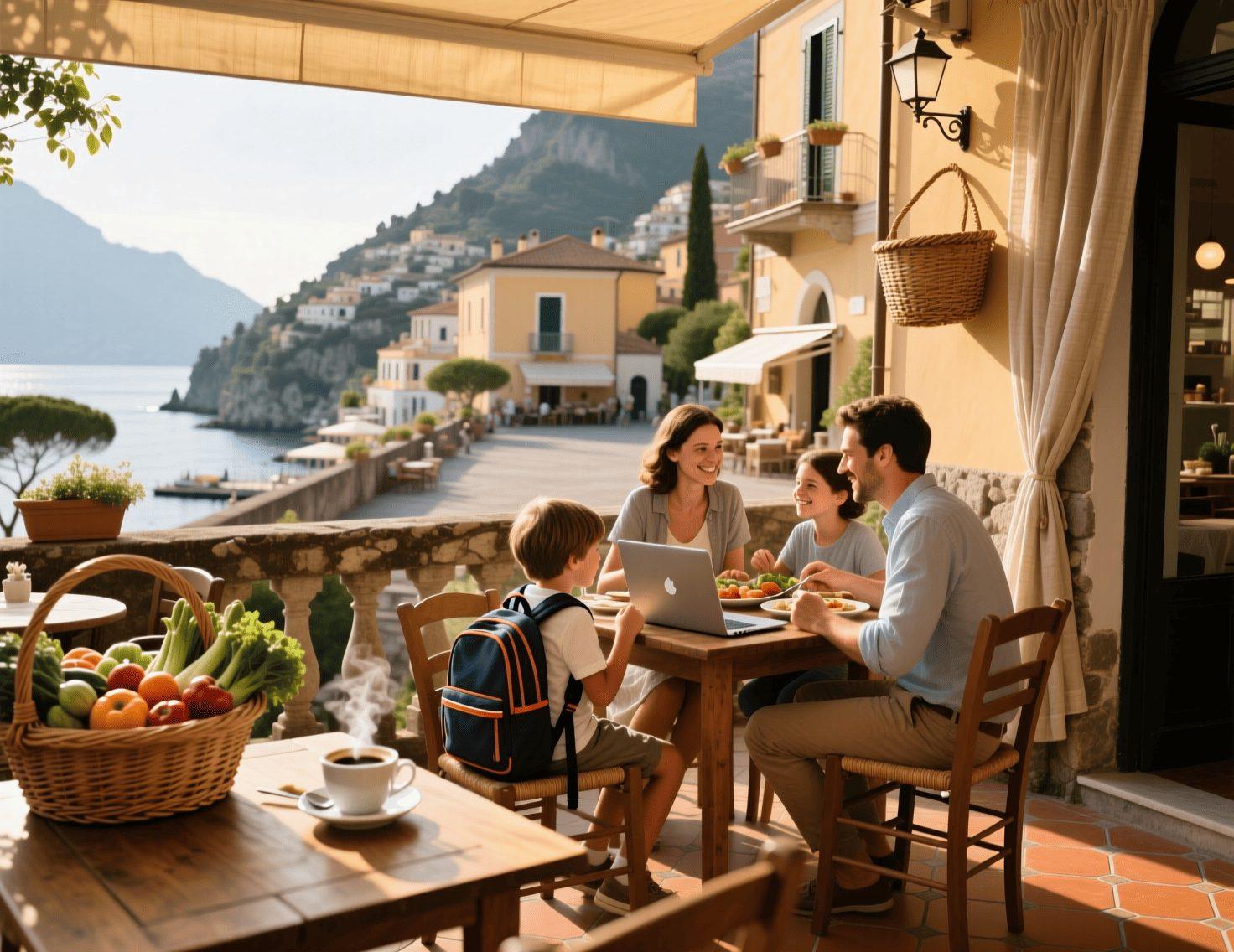
How much does it cost to live in Italy with a family (2 adults + 1 child)
– In Calabria — from 1,850 €/month: rent 600 €, groceries 450 €, kindergarten 250 € (municipal), transport 50 €.
– In Puglia — from 1,950 €/month, but the cost of school lunches is higher (+40 €/month per child).
– In Tuscany — from 2,600 €/month, due to expensive apartments and paid school programs.
– In Milan — from 3,900 €/month, especially if the child goes to an international school (from 800 €/month).
Regional scholarships are available for families: Bonus Asilo Nido — up to 1,500 €/year for a child under 3 years old.
→ Support in moving with your family — Italiatut
How to reduce costs without compromising the quality of life
– Use the Io Studio student card — discounts in museums, transport and cafes throughout Italy.
– Buy groceries at Mercato rionale (market by area) — on Tuesdays and Fridays after 1 p.m. — discounts up to 50%.
– Take a bike instead of a car — bike paths are developed in most cities, and parking in the center costs up to € 5/hour.
– Connect conto online — N26 or HYPE do not charge a commission for transfers to the EU and issuing a card.
For those who want to “try on” life in Italy before moving, the GIDtut team offers author programs on popular cities.
If you are wondering how much it costs to live in Italy and want to get an accurate calculation for your city and lifestyle, write to us on Telegram.
Living in Italy is not a luxury. It’s a conscious choice. And we are helping to make it — confidently, without surprises and with a reserve of “Dolce Vita”.